Sometimes you just want brownies. Tuesday, November 8, 2011
Finding Betty
Sometimes you just want brownies. Friday, November 4, 2011
Bixi - breath

Monday, October 10, 2011
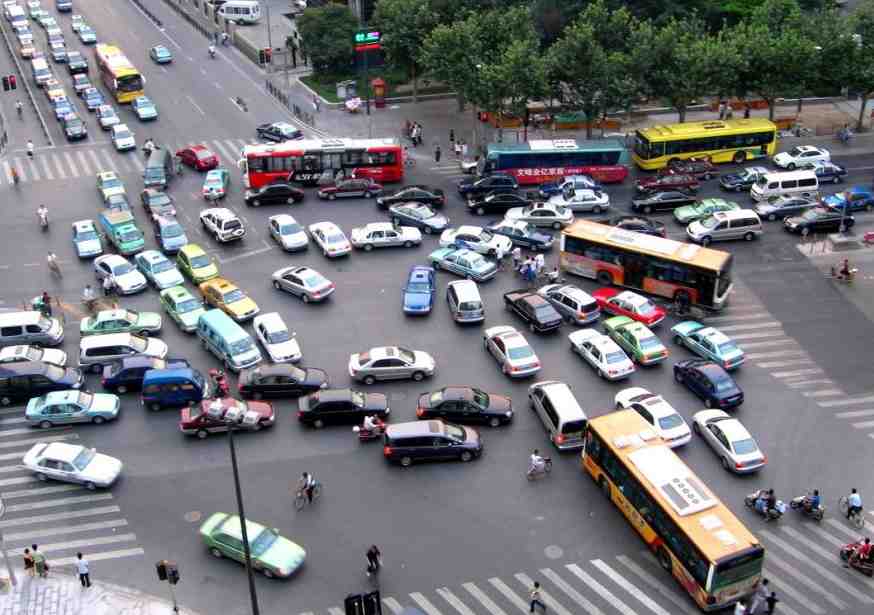
Negotiating Foshan's Traffic: A Few Observations and Tips
So here they are...
1. Traffic lights are suggestions, and weak ones at that.
http://www.china-mike.com/wp-content/uploads/2010/12/chinese-traffic-chaos-small.jpg
3. “Look both ways” is good advice when crossing ONE WAY streets.
4. Traffic lights out? No problem – one of Foshan’s friendly, committed traffic guards will be on hand to offer help.*
5. When operating a motor vehicle, engage the horn no less than 65% of the time.
6. Drive on the right side of the road, unless you feel like driving on the left side.
7. If you drive on the left side of the road, alert other travelers by honking your horn frequently. You should also do this when traveling on the right side of the road.
8. If you choose to drive a motorcycle or scooter, that’s great! You have access to another lane
of traffic – the sidewalk.
9. A typical Chinese motorcycle can comfortably seat8 passengers and/or 3 passengers and the carcass of a hog. For visual evidence, see the link in #13.
10. To secure your motorcycle/scooter load (bricks, slabs of granite, propane tanks, live or dead animals, a quantity of styrofoamlarge enough to fill a small barge, etc.), 2-3 feet of string will generally suffice. If you have a passenger, the string is not necessary.
11. If you don’t own a car, no problem! Build your own! A boat motor mounted on a lawnmower chassis is recommended.
12. A ride on a motorcycle/scooter can be a great way for a child to explore the world and gain kinesthetic awareness:
http://ts3.mm.bing.net/images/thumbnail.aspxq=1279112589738&id=6172bf5a2d0ecdbe8ad215ac7b1f7360
13. Faith in a higher being/the afterlife is suggested.
*Until it rains and/or they get bored/distracted
Friday, September 23, 2011
Traveling to Yangshuo
One of the documentaries that I watched was a BBC series called Wild China. Being a nature girl at heart, the images that were cast upon my computer screen were very pleasing to the eye. Vast open landscapes, clean, clear waters & roaming forest animals allowed me to realize that there was more to China than the steel, concrete and polluted haze that we often hear about on the news.
One place that captivated me the most was an area in Guangxi province called, Yangshuo. I knew from the DVD that this place was unlike any I had ever laid eyes on or set foot in. Its vast karst peaks were draped in green bamboo and hardwood forests. Its valleys were flooded with wildlife that lived along the rivers that meandered through its valleys. The local people who live there seemed to work with the land as their ancestors had for over 1,000 years. I had to go see this place.
This last week I finally got to go.
Our trip took us to first to Guilin, which we flew to from Guangzhou, on a 50min airplane ride.
Even though Yangshuo is very close to where we are, the roads and public transportation make what should be about a 4-hour drive into 8 hours... much of which is sitting in traffic on Chinese highways and freeways. We elected to fly.
Once we got to Guilin, we had to make our way to the city center to find the public bus station.
Mind you this “small town” is a village of 1.3 million people. Here, we had to use our limited Chinese language skills and our very good charades skills to get 2 tickets for the 12:10pm bus to Yangshuo. After about 10min of animated talking to a few different people, we had our tickets and just had to wait for our bus. (Side note: If you are planning on traveling in China, go
to the bathroom BEFORE you get to a bus station. Squatter toilets, no doors, no toilet paper, no flushing …I think you get the picture).
Once on the bus I was able to start to see the beautiful landscape that I was in. I could hardly wait to start biking and climbing. We got dropped off on West Street in Yangshuo (named for all the westerners you see on it) and hailed a taxi to our guesthouse that was 5k out of town. Nikolai and I again used our almost nonexistent Chinese language and bartering skills to get a good price on a taxi (since out there they do not have meters) and made our way towards Half Moon Village.
Once at our final destination we stepped out of the car and set foot into the beautiful pomelo grove that was in front of the guesthouse. It seemed almost instantly the sweat that was on my skin ceased pooling as the temperature dropped about 10 degrees. “Welcome” said a warm voice with the familiar staccato sound of a Chinese accent, “You must be Nikolai and Jennifer.” We were given fresh fruit, which we ate ravenously, and then led to our room in the renovated barn in the back of the house. It was quiet. It was cool. It was perfect.
Over the next five days we spent our time hiking, biking, swimming and rafting through the Yangshuo countryside. We spent almost every evening on the rooftop deck of our guesthouse overlooking the lush green valleys and hills that
surrounded the little village. We indulged on authentic Italian and Chinese cuisine and had our first taste of good wine in months. (Side note #2: The Chinese are just starting to figure out what wine is. Most of it here is pretty lousy.)
One night, as Nikolai and I sat on the rooftop deck sipping Argentinean wine and eating Chinese ravioli (jiaozi or dumplings). I looked around and realized what an absolutely beautiful place I was in. I
guess China really is more than steel, concrete and pollution. It is beautiful.
Saturday, September 10, 2011
Land of Fruit
Ask people in Minnesota what their favorite season is and
many of them will reply, “Fall.” For some, it is the cooler temperatures and the brilliant colors of leaves; for
others it is the start of a new school year or the excitement of football
season. For me, Fall means the start of apple
season.
It pained me a little to think that I was going to be
leaving Minnesota just before my favorite time of year. I would, sadly, miss all of the Braeburns,
Firesides and Honeycrisps, the apple crisps and cider. Hoping I could find an alternative, my first
week in China I went to a market and (even though every travel book tells you
not to) bought an apple. When I got home,
I quickly peeled the “Grown in New Zealand” sticker off and, as I bit in, realized
immediately that it was not the same. As
the soft, pinkish, skin gave way to the pale inside, I quickly knew that the
apple lacked anything resembling the complex sweet, tart and sour tastes of the
apples back home.
I was bummed…
That is, until a few weeks back, when a group of coworkers
went on a bike trip north and east of Guangzhou. I fell behind the group because, as usual, I
was taking pictures. As I biked up to
them I noticed that they were picking things out of a tree hanging over the
trail. I asked my coworker, Sarah, what
they were she said, “here” and pulled a branch down for me to pick some.
I turned the strange, berry-like fruit over in my hand. It had an outer shell that felt like smooth
bark. “Can you eat these?” I
asked. “Sure”, she said. “Look.
Even the goats over there are.”
Sure enough, there was a group of goats that munching on the fruit about
10 feet off the trail.
“How?” I asked,
furrowing my brow and curling my lip with the thought of having to eat
something that looked and felt like bark.
“Here, let me show you,” she said.
I watched as she gently squeezed the “bark berry” until it
popped open. Inside, it resembled
something of a peeled grape. She popped
it in her mouth and then handed me one to try.
Once I opened it, I carefully placed it in my mouth. WOW!
The texture was like a grape but the taste was like nothing I had ever
eaten before. It was a combination of
grape, coconut and…apple. I quickly
reached up and grabbed a few more. “They
are called longyan, or dragon’s eye fruit,” another teacher told me.
After this experience, I was thrilled to find that the
market behind my school sells these.
People go out into the country and collect them and then bring them into
the city to sell, along with many other fruits, including dragon fruit,
pomegranates & pomelos.
Though longyan are nothing like the Minnesota apples I love,
they will be a great substitute while I am gone.
Wednesday, August 24, 2011
Peanuts & Chopsticks
utensils.
I quickly found that my skill in chopsticks had been honed in use of noodles and I did not have the necessary expertise to transfer my skills to foods of odd shapes, sizes and textures. There have been many times where my Chinese acquaintances have laughed or giggled at me as I clumsily moved a steamed dumpling from the center of our table to my plate or mouth. I would say my success rate with dumplings is now up to about 90%! That means 1 in 10 dumplings I attempt to eat end up on the table, floor or someone else’s lap.
One of biggest challenges with chopstick has been peanuts. It is common for many of the
restaurants here in china to serve you roasted and salted peanuts as an appetizer before your meal. The first time I saw them I was SO excited! In my excitement I reached for the bowl and poured some into my hands and onto my plate. Yes, I thought, a food I can eat with my hands!
As I sat there eating one peanut after another with my fingers I began to notice the other people at the table (mostly Chinese or people who had been in China for more than a month) grab their chopsticks and take the peanuts one at a time. WHAT! I thought very loudly in my head. This cannot be!
Hoping that no one had seen me take half of the bowl by dumping it on my plate, I reached for my chopsticks. I carefully examined my grip, making sure I placed them high enough in my hands to obtain ultimate dexterity. Then I watched. I figured, perhaps this was something I could
learn by just watching.
After a good 4 minutes of observation I figured I was set. It seemed simple…go only for one peanut at a time, reach for the middle narrow part of the peanut and grip firmly. I checked my grip one more time and waited for the bowl to come my way on the turntable. As I eyed its arrival I had to time it perfectly as to not miss my opportunity. I might only have 10 seconds before the table would get moved again and my precious peanuts would be out of reach.
With a steady hand I reached in the bowl gripped firmly onto a peanut and pulled it out of the pile. Success! I began to move my chopsticks away, eyeing my prize as I watched in horror as I began to feel it slipping away. No, I thought, I have to make it to my plate. It seemed that the
next moment went on in slow motion as my hand tried to contort itself to keep a grip on its precious cargo. With fingers slowly twitching I tried with all of my might to hold on.
It dropped to the table.
To me it seemed like a very loud noise, but everyone else kept on eating and talking. I reached for the peanut with my hand and quickly put it in my mouth. No big deal, I thought, no one was watching. I would just try again.
The second trial was just as awkward except this peanut I grabbed seemed to be slipperier as it did not last as long on my chopsticks and the peanut landed next to the bowl. The third, fourth and fifth tries I came up empty handed as the peanut fell out before I could even lift it up. Ugh! I thought I was never going to get it.
And then IT happened.
A moment I will never forget. I watched our friend Lucien reach into the bowl and slowly pull out his “prize”. The whole half of the table seemed to stop for a moment and gaze at what Lucien had done. There, sitting on the end of his chopsticks sat 3 peanuts, side by side, securely between his grip.
Lucien grinned from ear to ear as I and others gazed on in amazement. He placed the peanuts in his mouth and gave me a nod.
Perhaps someday I too will learn how to get three peanuts at once. Until then, I just want to learn
to get them to my plate.